 Skip to Content

5 Crucial Mistakes to Avoid After a Winter Injury: From a Staten Island Ice Slip and Fall Attorney
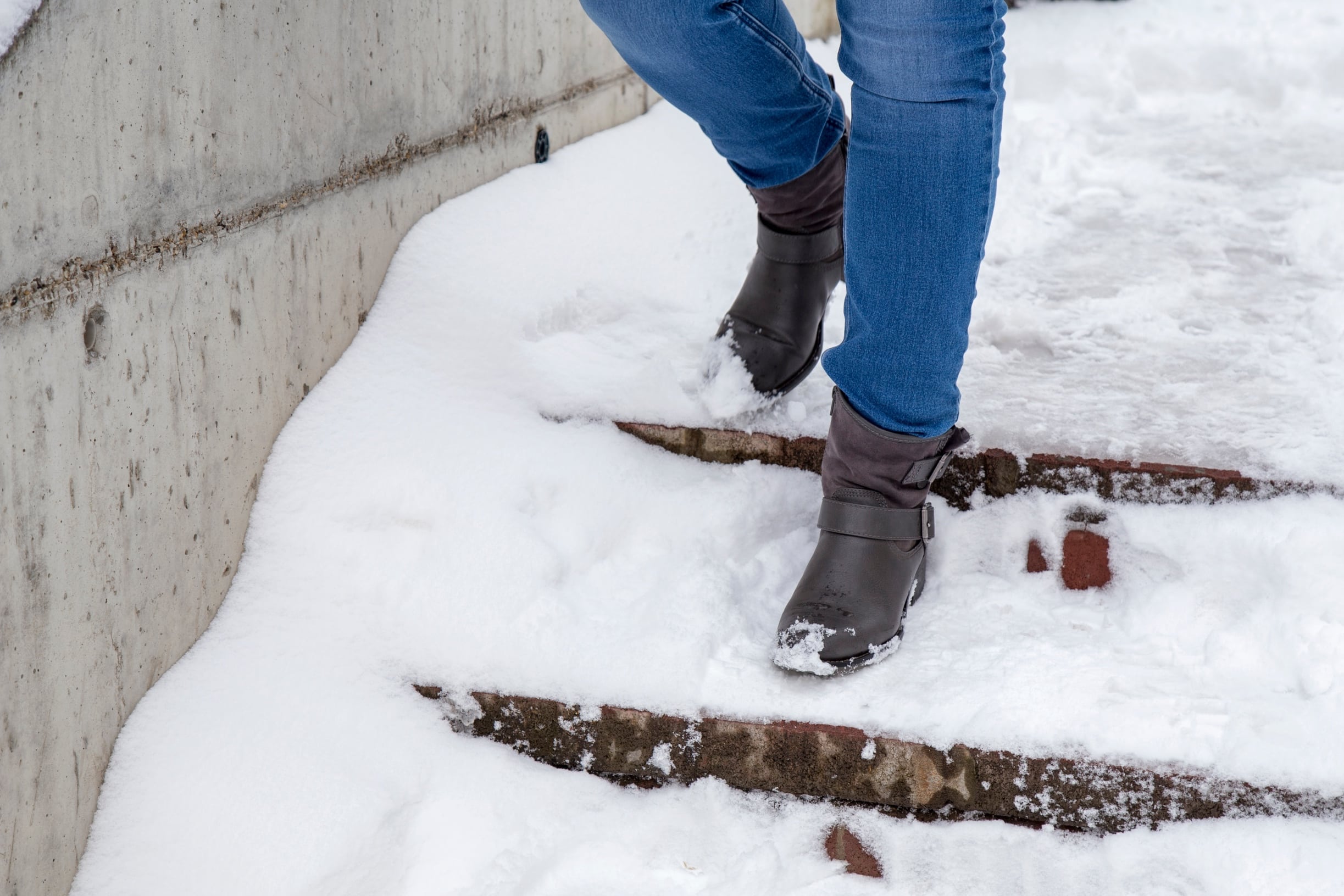
Winter in New York transforms familiar sidewalks, parking lots and pathways into dangerous environments, particularly on Staten Island. Accidents caused by uncleared snow and ignored ice patches are common, leading to severe and life-altering catastrophic injuries. Physical recovery is most important, but the legal steps taken—or missed—right after an ice slip and fall often determine whether the victim gets compensation.
New York law imposes a strict burden of proof on the injured party, and even when a property owner’s negligence seems obvious, minor procedural errors can fatally harm your personal injury claim. If you’ve been hurt in an icy fall on Staten Island, getting an experienced lawyer on your side fast can make all the difference in making sure you are paid what you are owed.
Staten Island ice slip and fall attorney: Initial Steps to Protect Your Claim
The minutes and hours immediately following an ice-related fall are critical not only for medical recovery but also for establishing the legal foundation of a claim. Two common and detrimental errors arise at this stage: delaying necessary medical treatment and failing to properly report the incident to the responsible party.
Mistake 1: Ignoring Immediate Medical Care (And Why the Delay Hurts)
Medical records form the definitive legal and financial basis of any premises liability lawsuit. When a person suffers a fall and delays seeking professional medical attention, the defense team for the property owner will inevitably exploit this gap in treatment history. Lawyers for the defense and insurance adjusters often argue that the injury either pre-existed the fall or was caused by a subsequent, unrelated event. This ambiguity creates a serious barrier to proving direct causation connecting your injury to the wreck—the legal requirement that the property owner’s negligence directly resulted in the sustained injury.
A delay in treatment can be used to argue that the injured party failed to mitigate their damages. Under this legal argument, the defense asserts that the plaintiff’s delay exacerbated the severity of their injury, suggesting that the plaintiff is responsible for the worsening condition. A decisive counter to this strategy requires immediate, documented medical consultation, demonstrating compliance with professional medical advice and clearly connecting the trauma to the date, time, and circumstances of the slip and fall.
Mistake 2: Failing to Report the Accident to the Responsible Party
A slip and fall accident on ice must be formally reported to the property owner, manager, or tenant responsible for the premises as soon as safely possible. This formal notification serves two key purposes. First, it creates an official, verifiable record that the incident occurred on the property, establishing temporal proof of the injury event.
Second, it gives the property owner formal notice that an injury occurred on their premises due to a hazardous condition, eliminating potential future defenses based on a lack of knowledge of the incident itself. It is also vital to collect the contact information of any employees or managers present at the scene and to record any statements they may make regarding the ice conditions or previous attempts to clear the area.
Your Staten Island ice slip and fall attorney will use this documentation to initiate a formal investigation.
Documenting Negligence: What Evidence Do We Need from the Accident Scene?
A successful premises liability claim for an ice injury hinges entirely on establishing that the property owner breached their duty of care. Unlike structural defects which are permanent, ice hazards are temporary, making the immediate collection of evidence paramount. This process requires proving two interconnected elements: the existence of the dangerous condition and the property owner’s knowledge of that condition.
The Key to Liability: Proving Actual or Constructive Notice
In New York, property owners generally cannot be held liable for an injury caused by a condition they did not know about and had no reasonable opportunity to fix. To overcome this hurdle, a plaintiff must prove either Actual Notice or Constructive Notice.
Actual notice means the owner was directly aware of the specific hazard, often through a prior written complaint, a verbal warning, or if an employee created the condition (e.g., faulty drainage leading to a freeze). Constructive notice is more common in ice cases and requires demonstrating that the dangerous condition existed for a sufficient duration that a reasonably attentive property owner should have discovered and remedied it. Evidence used to prove constructive notice in an ice case often includes details like the thickness or size of the ice, visible dirt or debris embedded in the ice, or a yellowed/discolored appearance, all suggesting the patch was “old ice” that had been neglected for a substantial period.
Overcoming the “Storm-in-Progress” Defense in New York
One of the most powerful defenses employed by property owners in winter injury cases is the “storm-in-progress” doctrine. New York law acknowledges that owners cannot be expected to continuously clear precipitation as it falls. Generally, an owner, tenant, or snow removal contractor will not be held responsible for hazards accumulating during an ongoing storm until a reasonable period of time has passed after the storm’s cessation to allow for remediation. For property owners in New York City, this grace period is often codified by administrative law, generally allowing four hours after the cessation of snowfall during business hours.
However, this defense is not absolute. A sophisticated legal strategy, often requiring expert meteorological consultation, can defeat this argument. An experienced Staten Island ice slip and fall attorney will analyze weather data from the days and even weeks preceding the fall to establish preceding conditions. If the injury was caused by a patch of ice that had formed days prior and was merely covered by the current storm’s light dusting of new snow, the storm-in-progress defense fails. The duty to clear the pre-existing, long-neglected hazard was already breached. Furthermore, if the property owner attempted to clear the snow but did so negligently—for example, by piling snow near a walkway where it later melted and refroze—they may have created a new hazard that is not protected by the storm-in-progress rule.
Using Timestamped Photographic Evidence to Preserve the Hazard (Mistake 3: Relying on Memory)
The defining characteristic of snow and ice is its temporary nature; the evidence of the property owner’s breach of duty can melt away entirely within hours. Relying solely on memory or verbal testimony is a crucial mistake (Mistake 3). The injured party, or a trusted person acting on their behalf, must immediately gather comprehensive, timestamped photographic and video evidence of the scene.
This evidence must go beyond merely showing the victim’s location. It must capture the specific condition of the hazardous ice patch (its size, thickness, and color), the surrounding context (the lack of salt, sand, or de-icing agents), and the general lack of clearing on the property itself. This contemporaneous documentation is invaluable because it preserves the precise, transient condition that must be presented to the court to prove negligence and causation.
Understanding New York’s Comparative Fault Rules
When a victim brings a lawsuit, the defense team will invariably investigate the plaintiff’s actions leading up to the fall, attempting to shift a portion of the blame onto the injured party. This effort is designed to utilize New York’s system of comparative negligence to reduce the property owner’s financial liability.
CPLR 1411: How Pure Comparative Negligence Works
New York State utilizes a pure comparative negligence system, codified under Civil Practice Law and Rules (CPLR) § 1411. This law protects injured parties by ensuring they retain the right to seek compensation regardless of their degree of fault in the accident. Under this pure system, if a jury determines the total damages are $\$100,000$, and the plaintiff is found to be 40% responsible for their own fall (perhaps they were walking too fast), their recovery is reduced proportionally to 60% of the total, or $\$60,000$.
This system is highly favorable to accident victims compared to the laws in states that employ modified comparative negligence rules, which often bar recovery entirely if the plaintiff is 50% or 51% or more at fault. Nevertheless, the defense’s goal remains the same: assigning the highest possible percentage of fault to the plaintiff to minimize the payout.
Defending Against the “Open and Obvious” Hazard Argument
A common defensive tactic used to increase the plaintiff’s comparative fault percentage is the argument that the hazard was “open and obvious”. Defense attorneys assert that a reasonable person, exercising ordinary caution and perception, would have seen the ice and avoided it, implying carelessness on the part of the plaintiff.
A veteran Staten Island ice slip and fall attorney counters this argument not by denying the hazard’s visibility, but by challenging its avoidability and the owner’s primary duty of care. For example, if black ice was present beneath a thin sheet of new snow, or if the hazard was located in a poorly lit area or on the only necessary path of travel (such as the main entrance to a commercial property), the hazard may be deemed unreasonably dangerous and unavoidable despite its visibility. The legal analysis shifts from subjective visibility to objective duty, emphasizing that the property owner’s failure to maintain a reasonably safe premises far outweighs any momentary lapse in the plaintiff’s attention.
Common Defenses Used to Assign Blame (Mistake 4: Prematurely Admitting Fault)
A fourth crucial mistake is admitting fault or apologizing at the scene. These statements can be seized upon by the defense as evidence that the victim accepts responsibility. Defense counsel will use various arguments to assign comparative blame, including asserting that the plaintiff was distracted (e.g., using a cell phone), was wearing inappropriate footwear for the weather, or was traversing an area where they were not supposed to be. By consulting a Staten Island ice slip and fall attorney immediately, victims receive guidance on how to report the incident factually without compromising the claim by making subjective statements of fault.
Private Property vs. Public Property Liability (Linking to Tertiary Focus)
The identity of the legally responsible party—whether a private owner or a municipal entity—determines which complex set of liability laws applies. Confusing the property type and jurisdiction is a crucial fifth mistake that can lead to missing fatal deadlines.
The Critical Distinctions in NYC Sidewalk Snow Removal Duties
In New York City, liability for sidewalk hazards is not always intuitive. Historically, the City was responsible for public sidewalks, but the liability structure has significantly changed. According to NYC Administrative Code § 7-210, liability for injuries caused by sidewalk defects, including the failure to remove snow and ice, has been shifted from the City to the adjacent property owners for most commercial and large residential properties.
This liability shift is a critical detail for personal injury claims because it typically means a victim can sue the private property owner directly, avoiding the extreme hurdles required when suing the municipality. However, there is an important exemption: owners of one-, two-, or three-family buildings that are owner-occupied and used exclusively for residential purposes are typically exempt from this transfer of liability. If the fall occurs adjacent to one of these small residential properties, the liability may revert back to the City of New York.
Mandatory Grace Periods for Clearing Ice and Snow
For property owners who are responsible under § 7-210, the law establishes specific, defined grace periods for snow and ice removal. The failure to comply with these explicit rules constitutes the legal breach of duty necessary to prove negligence. The clearance deadline depends entirely on the time the precipitation ceased.
|
When Snow Stops Falling |
Grace Period to Clear Sidewalk |
Legal Implication (Breach of Duty) |
|
Between 7:00 AM and 4:59 PM |
4 Hours |
Failure to clear within this period suggests negligence and a breach of duty. |
|
Between 5:00 PM and 8:59 PM |
14 Hours |
Provides definite clearance time for evening storms. |
|
Between 9:00 PM and 6:59 AM |
Must be cleared before 11:00 AM |
Allows for necessary overnight rest while setting a clear morning deadline. |
Suing the Municipality: The Prior Written Notice and 90-Day Hurdles
If the liability for the accident falls back to the City of New York—for example, due to the residential exemption, or if the accident was caused by a structural defect in the sidewalk (like a large crack or uneven pavement) that exacerbated the icing—the victim faces immense legal challenges.
For claims involving underlying structural sidewalk defects, the City cannot be held liable unless it received Prior Written Noticeof that specific defect before the accident occurred. Locating evidence of this prior written notice—such as archived 311 complaints, municipal inspection reports, or documented complaints—is an arduous and specialized task that an individual cannot effectively manage.
Furthermore, any lawsuit against the City of New York or a municipal entity requires the filing of a formal Notice of Claim within 90 days of the accident date. This strict, short deadline is non-negotiable and represents a fatal hurdle if missed. This 90-day requirement fundamentally changes the Statute of Limitations for municipal claims, emphasizing the urgency of legal action.
Why Acting Fast is Necessary for Your Staten Island ice slip and fall attorney Case
Given the transient nature of ice evidence and the stringent deadlines imposed by New York law, immediate action is the singular most important factor in preserving an ice slip and fall case.
The Non-Negotiable 90-Day Notice Deadline
When a fall occurs on a sidewalk, even if initial evidence points to a private property owner’s negligence, the possibility that municipal negligence contributed to the hazard (e.g., poor city drainage or structural issues) means the City must be treated as a potential defendant. This forces the injured party to operate under the constraints of the 90-day Notice of Claim requirement. Missing this initial 90-day deadline completely and irrevocably bars the victim from recovering compensation from the municipality, regardless of how severe the City’s negligence may have been.
This reality means that the three-year Statute of Limitations (SOL) for general personal injury negligence claims often proves to be a misleading timeline for Staten Island residents. Due to the inherent complexity of determining precise sidewalk jurisdiction and the potential for shared fault, the effective, functional working deadline for maximum legal flexibility is the 90-day Notice of Claim period. Delaying action past this short window sacrifices significant legal options, making prompt engagement with a Staten Island ice slip and fall attorney critical.
The Standard Three-Year Statute of Limitations for Negligence Claims
For claims solely against private entities, New York Civil Practice Law and Rules (CPLR) § 214 generally permits plaintiffs three years from the date of injury to file a negligence lawsuit. While this period may seem ample, relying solely on this longer deadline is a serious strategic mistake when ice is involved, as key evidence will have long disappeared.
|
Defendant Type |
Initial Notice Requirement |
Statute of Limitations (To File Lawsuit) |
Impact of Delay |
|
Private/Commercial Property Owner |
None (Focus on proving Notice) |
3 Years from the date of injury |
Evidence of ice/negligence melts and disappears; logs may be altered. |
|
City of New York (Municipal) |
Notice of Claim (mandatory within 90 days) |
1 Year and 90 Days from date of injury |
Missing 90-day deadline completely bars the claim against the City. |
Preserving Critical Evidence Before it Melts, Thaws, or Gets Cleaned

The urgency of retaining an attorney is driven by evidentiary preservation. Property owners are required to maintain maintenance logs, snow removal contracts, and inspection records. The longer the delay, the greater the risk that such documentation might be altered, lost, or misplaced. An attorney acts immediately to preserve these records, interview witnesses while their memories are fresh, and engage forensic experts, such as meteorologists, to analyze temperature and precipitation data. This expert meteorological review is often the linchpin used to defeat the property owner’s “storm-in-progress” defense, an essential step in demonstrating the owner’s long-term neglect of the pre-existing icy condition.
The intricacies of New York’s premises liability law—from the complex rules governing the transfer of sidewalk liability via NYC Administrative Code § 7-210 to the necessity of overcoming the common “storm-in-progress” defense—require specialized expertise. Furthermore, the short, non-negotiable 90-day deadline applicable to many Staten Island sidewalk claims against municipal entities means time is not a luxury afforded to the injured party. Successfully securing compensation requires a comprehensive, authoritative legal approach that preemptively addresses the five crucial mistakes of delaying medical care, inadequate reporting, poor documentation, misunderstanding comparative fault, and waiting too long to initiate legal proceedings. For those suffering from winter injuries, securing the guidance of a dedicated Staten Island ice slip and fall attorney is necessary to navigate these technical complexities and ensure the claim is robustly preserved before critical evidence is lost and legal deadlines expire.