 Skip to Content

What Should You Do Immediately After a Car Accident on Staten Island?
What Should You Do Immediately After a Car Accident on Staten Island?
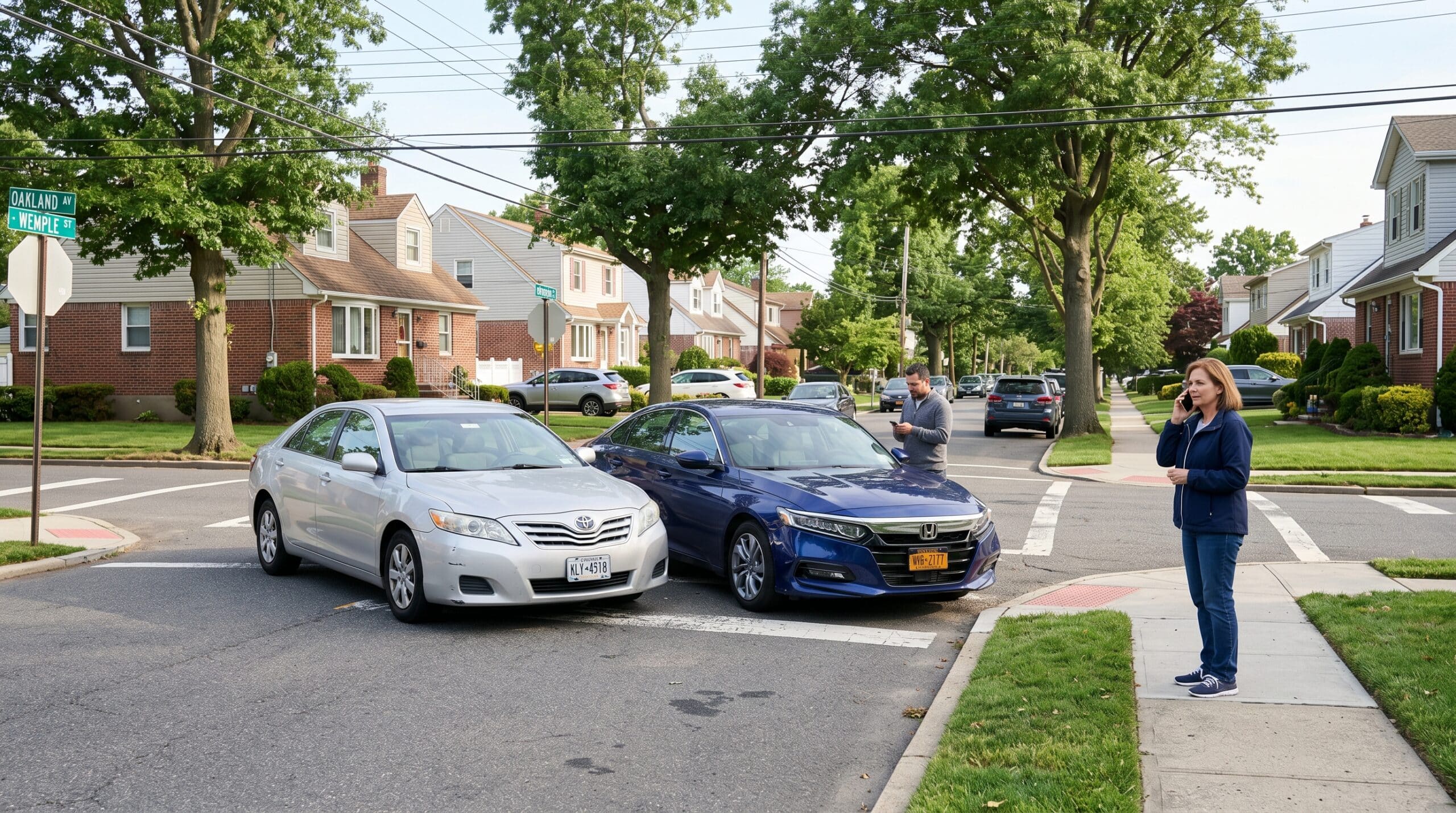
If you were just in a crash, the answer is simple: call 911, stay at the scene, and see a doctor within 48 hours. Working with a Staten Island car accident lawyer from the start protects your health and your legal rights at the same time.
Staten Island roads see thousands of collisions every year, and the fallout reaches far beyond bent metal. According to NYC Vision Zero crash data, traffic crashes across New York City injure tens of thousands of people every year, and Staten Island contributes a disproportionate share given its car-dependent layout. The steps you take in the first two days after a crash can decide whether you recover full compensation or leave money on the table.
The First 48 Hours Matter Most After a Staten Island Car Accident
Why the Clock Starts Immediately
Evidence disappears fast after a collision. Skid marks fade, witnesses move on, and surveillance footage gets overwritten within days. Insurance adjusters, meanwhile, start building the other side’s file the moment a claim is reported. Every hour you wait is an hour your documentation window narrows.
New York law gives most car accident victims three years to sue under NY CPLR §214, the civil statute of limitations for personal injury. But the no-fault insurance system has its own tight deadlines: you generally have 30 days to submit a no-fault application. Miss that window and you can lose your medical coverage entirely, no matter who caused the crash.
Your Two Immediate Priorities
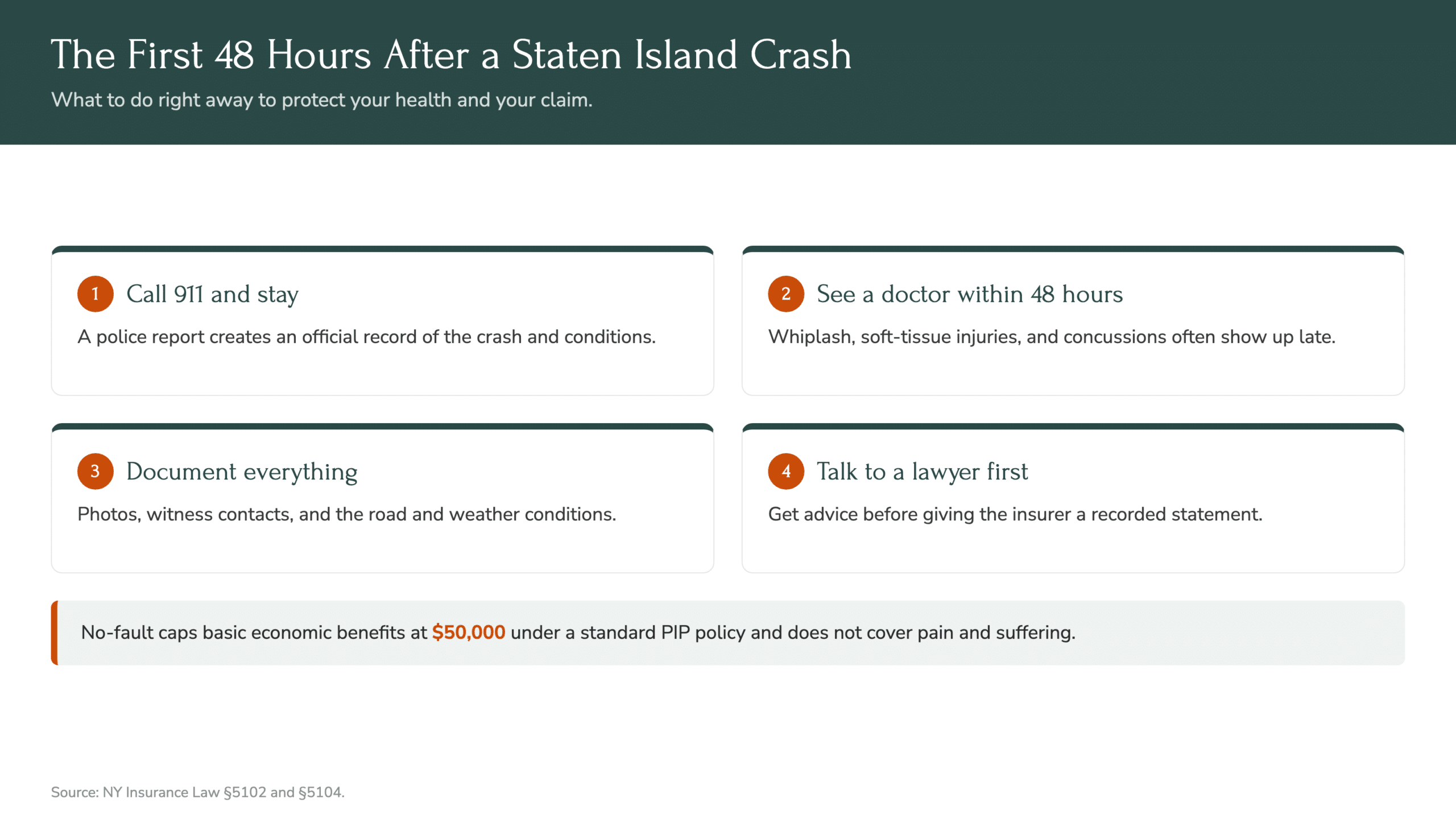
First, call 911 even if the crash seems minor. A police report creates an official record of the collision, the parties involved, and the road conditions at the time. Second, see a doctor within 48 hours. Gaps in treatment are one of the most common arguments insurance companies use to reduce or deny injury claims.
Where Most Staten Island Crashes Happen: Hylan, Victory, and the SI Expressway
Hylan Boulevard and Victory Boulevard
Hylan Boulevard runs the length of the East Shore and handles heavy commercial and residential traffic. Its mix of driveways, bus stops, and signalized intersections leads to frequent rear-end and angle collisions. Victory Boulevard cuts across the borough’s midpoint and feeds straight into Staten Island’s busiest commercial corridors, which makes it another steady source of intersection crashes. If you were hurt at one of these locations, an Staten Island intersection accident lawyer can help you identify everyone who’s responsible, including the municipality if a dangerous signal setup played a role.
The Staten Island Expressway and Verrazzano Approaches
The Staten Island Expressway (I-278) is the borough’s main artery, and its merge zones near the Verrazzano-Narrows Bridge approaches are especially prone to high-speed rear-end crashes and sideswipes. NY DMV statistical summaries track crash frequency by roadway type statewide, and expressways consistently account for a large share of serious-injury collisions. Speed differences at on-ramps and heavy truck traffic only add to the risk on this stretch.
What to Do at the Scene of a Staten Island Crash
Following a clear sequence at the scene keeps you safe and builds a stronger record for your claim. Take each step in order, even if you feel shaken.
- Call 911 and ask for police and, if needed, emergency medical services. Don’t move an injured person unless there’s an immediate danger like fire.
- Move your vehicle to a safe spot if it’s drivable and doing so won’t disturb critical evidence. Turn on your hazard lights.
- Exchange information with the other driver: full name, license number, insurance carrier and policy number, vehicle registration, and contact details.
- Document the scene. Photograph vehicle damage, license plates, road markings, traffic signals, weather conditions, and any visible injuries on yourself.
- Collect witness contact information. Bystander accounts often become important when the other driver’s version of events doesn’t match yours.
- Don’t make statements about fault to the other driver or to any insurance representative at the scene. Stick to factual descriptions only.
- Notify your own insurance company promptly, but talk to an attorney before giving a recorded statement to any insurer.
Why Medical Documentation Matters Even for Minor Injuries
Delayed Symptoms Are Common
Whiplash, soft-tissue injuries, and concussions often show no obvious symptoms at the crash scene. Adrenaline masks pain, and swelling or nerve irritation can take 24 to 72 hours to become noticeable. Seeing a physician promptly creates a medical record that ties your injury to the collision date, which is critical if symptoms get worse later.
How Gaps in Treatment Hurt Your Claim
Insurance adjusters look for any interruption in your treatment schedule as evidence that your injury isn’t as serious as you claim. If you wait two weeks to see a doctor or skip follow-up appointments, the insurer will argue that the gap proves you healed quickly. Consistent, documented care tells the opposite story and supports the full value of your claim.
Keep copies of every bill, prescription, diagnostic image, and treatment note from the first visit onward. These records form the financial backbone of your case, alongside lost-wage documentation from your employer.
Understanding New York’s No-Fault Insurance System
What No-Fault Covers
New York is a no-fault state, which means your own auto insurance pays your medical bills and a portion of your lost wages up to the policy limits, no matter who caused the crash. You don’t need to prove the other driver was negligent to receive these benefits. A Staten Island no-fault insurance lawyer can help you file correctly and appeal if your insurer disputes a treatment or service.
The Limits of No-Fault Benefits
No-fault doesn’t cover pain and suffering, and it caps economic benefits at $50,000 under the standard personal injury protection policy. If your expenses go past that cap or your injuries qualify as serious under state law, you may step outside the no-fault system and pursue a third-party liability claim against the at-fault driver.
The Serious Injury Threshold in New York
What the Law Requires
To sue the at-fault driver for pain and suffering in New York, your injury has to meet the definition of a serious injury under NY Insurance Law §5102, the statute that sets the threshold. The law defines serious injury as a condition that causes significant disfigurement, fracture, permanent limitation of a body organ or member, significant limitation of use of a body function, or a medically determined injury that prevents you from performing substantially all of your daily activities for at least 90 out of 180 days following the accident.
Why Documentation Determines Threshold Eligibility
Meeting the serious injury threshold isn’t just a medical question; it’s a documentation question. Your physician has to use objective, quantified findings, like range-of-motion measurements, MRI findings, and functional assessments, rather than leaning only on your subjective pain reports. Without that objective support in the record, a defense attorney can challenge whether your injury qualifies, even if it genuinely limits your life.
How a Staten Island Car Accident Lawyer Builds Your Case
Investigating Liability
Our team at O’Connor Injury Law starts every case with a liability investigation. That means obtaining the police report, requesting any available traffic or intersection camera footage before it’s overwritten, interviewing witnesses, and, where it makes sense, consulting an accident reconstruction specialist. Staten Island’s road network often involves multiple parties: other drivers, the City of New York if a signal or pothole played a role, or a trucking company if a commercial vehicle was involved.
Distracted driving is a leading cause of crashes nationwide, according to NHTSA traffic safety facts, and our investigation regularly turns up phone records or dashcam footage that pins driver inattention as the cause of a collision.
Negotiating With Insurers
Insurance companies train their adjusters to settle claims quickly and cheaply. An attorney levels the playing field by calculating the full value of your claim, including future medical costs, lost earning capacity, and non-economic damages, before any number is put on the table. If a fair settlement can’t be reached, our team prepares your case for litigation in Richmond County Supreme Court.
Working on Contingency
Personal injury representation at O’Connor Injury Law is handled on a contingency-fee basis. You pay no attorney fees unless we recover compensation for you. That structure means our interests and yours are fully aligned from the very first consultation.
Contact O’Connor Injury Law in Staten Island Today
The hours after a crash are the most important ones for your health and your case. O’Connor Injury Law represents car accident victims across Staten Island and all five boroughs, and our team is ready to start protecting your claim right now.
Call our Staten Island office at +1-866-927-3809 for a free, no-obligation consultation. You can also learn more about your options by visiting our Staten Island car accident lawyer page or exploring our full range of services on our Staten Island PI lawyer page. There’s no fee unless we win your case.
FAQs